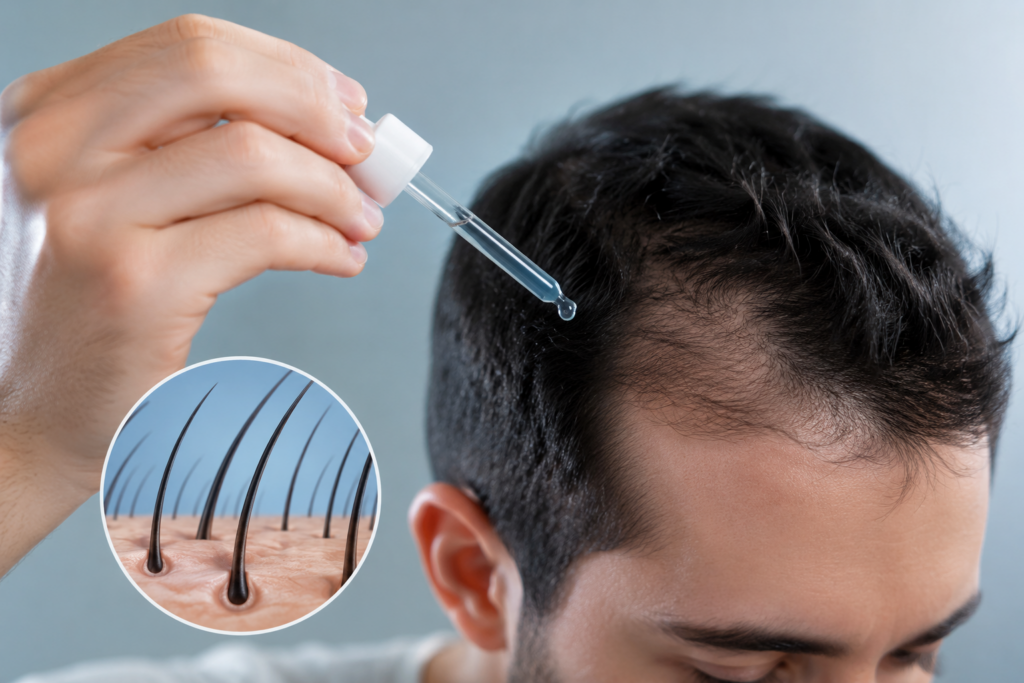
One of the most surprising experiences for men who begin using Minoxidil is noticing more hair falling out during the first few weeks of treatment. After starting a medication that’s supposed to help with hair growth, seeing extra hairs on your pillow or in the shower can feel discouraging.
This temporary increase in hair loss is commonly known as the Minoxidil shedding phase. Although it can be alarming, it is often a normal part of the hair growth cycle and does not necessarily mean the treatment is failing.
Not everyone experiences shedding, and the severity can vary considerably from person to person. Understanding why it happens, how long it usually lasts, and when you should seek medical advice can help you stay committed to treatment and avoid stopping too early.
What Is the Minoxidil Shedding Phase?
The Minoxidil shedding phase refers to a temporary increase in hair shedding that some users experience shortly after starting treatment.
Rather than causing permanent hair loss, Minoxidil may accelerate the natural hair cycle. Older, weaker hairs can shed earlier than they otherwise would, making room for new hairs entering the active growth phase.
Although the increased shedding can be unsettling, many hair specialists consider it an expected response for some patients.
Why Does Minoxidil Cause Shedding?
Hair follicles continuously cycle through three main stages:
- Anagen: The active growth phase.
- Catagen: A short transitional phase.
- Telogen: The resting phase, after which the hair naturally falls out.
Minoxidil appears to shorten the resting phase and encourage follicles to enter the growth phase sooner. As this happens, hairs that were already close to shedding may fall out more quickly than expected.
This process creates the impression that hair loss is getting worse, when in reality the follicles are often transitioning into a new growth cycle.
When Does Minoxidil Shedding Usually Start?
There is no exact timeline that applies to everyone, but shedding most commonly begins within the first few weeks after starting treatment.
Typical Timeline
- Weeks 2–4: Shedding may begin.
- Weeks 4–8: Shedding is often most noticeable.
- Months 2–3: Hair loss usually begins to stabilize.
- Months 3–6: Early improvements may become visible.
Some men never experience noticeable shedding, while others report a more dramatic temporary increase in hair fall.
How Long Does the Minoxidil Shedding Phase Last?
For most men, the shedding phase lasts between two and eight weeks. In some cases, it may continue for up to three months before gradually improving.
The exact duration depends on factors such as genetics, the stage of hair loss, individual hair growth cycles, and treatment consistency.
If shedding continues well beyond several months or becomes progressively worse, it’s worth discussing your symptoms with a healthcare professional.
How Much Hair Loss Is Considered Normal?
During the shedding phase, you may notice:
- More hairs coming out while showering.
- Loose hairs on your pillow.
- Extra shedding when brushing or styling.
- A temporary decrease in hair density.
Although this can be stressful, the increase is usually temporary. Most men find that shedding slows as treatment continues.
Does Everyone Experience Minoxidil Shedding?
No.
Many men use Minoxidil without experiencing any noticeable increase in hair shedding.
Likewise, the absence of shedding does not mean the treatment isn’t working. Every person’s hair cycle responds differently.
Is Shedding a Good Sign?
Shedding is often interpreted as a sign that Minoxidil is stimulating changes in the hair cycle, but it should not be viewed as proof that the medication will definitely produce excellent results.
Some men experience significant shedding and good regrowth, while others see improvement without shedding at all.
The most important factor is consistent use over several months rather than focusing on the first few weeks.
Should You Stop Using Minoxidil If You’re Shedding?
In most cases, no.
Stopping treatment during the shedding phase is one of the most common mistakes new users make. Because the process is often temporary, discontinuing Minoxidil too early may prevent you from seeing its long-term benefits.
Unless advised otherwise by a healthcare professional, continuing treatment as directed is generally recommended.
What If Shedding Continues?
If excessive shedding continues beyond three to four months, or if you notice rapid worsening of your hair loss, there may be other contributing factors.
Possible causes include:
- Progression of androgenetic alopecia.
- Poor treatment adherence.
- Telogen effluvium triggered by illness or stress.
- Nutritional deficiencies.
- Underlying medical conditions affecting hair growth.
A medical evaluation can help determine whether additional investigation or changes in treatment are appropriate.
Tips for Managing the Shedding Phase
Stay Consistent
Apply Minoxidil exactly as directed. Skipping applications may reduce its effectiveness.
Take Progress Photos
Monthly photos taken under the same lighting conditions can make gradual improvements easier to recognize.
Avoid Constant Mirror Checks
Hair changes occur slowly. Looking for daily improvements often leads to unnecessary frustration.
Be Patient
Most evidence-based hair loss treatments require several months before meaningful cosmetic improvements become noticeable.
Cost Considerations
Minoxidil remains one of the most affordable long-term hair loss treatments.
- Generic topical Minoxidil: approximately $15–$40 per month.
- Brand-name products: approximately $30–$70 per month.
- Low-dose oral Minoxidil: approximately $10–$40 per month, plus prescription costs where applicable.
Pros and Cons of Minoxidil
Pros
- Well-established treatment for male pattern baldness.
- Can improve hair density over time.
- Available in topical and oral forms.
- Relatively affordable.
Cons
- Temporary shedding may occur.
- Requires long-term use.
- Results vary between individuals.
- Stopping treatment usually leads to gradual loss of maintained hair.
Who Is Minoxidil Best For?
Best Candidates
- Men with early or moderate male pattern baldness.
- Those looking to slow hair thinning.
- Individuals willing to use treatment consistently.
- Men seeking a non-surgical option.
May Be Less Suitable For
- Men expecting immediate results.
- Individuals unable to commit to long-term treatment.
- People with scalp conditions that prevent topical application unless advised by a healthcare professional.
Frequently Asked Questions
How long does Minoxidil shedding last?
For most men, the shedding phase lasts between two and eight weeks, although some cases may continue for up to three months.
Is Minoxidil shedding normal?
Yes. Temporary shedding is a recognized response for some users and often occurs as hair follicles transition into a new growth cycle.
Does everyone experience shedding?
No. Many men never notice increased shedding after starting Minoxidil.
Should I stop using Minoxidil if my hair falls out?
In most cases, no. Continuing treatment is generally recommended unless a healthcare professional advises otherwise.
When should I expect visible results?
Many users begin noticing improvements between three and six months, with continued progress possible after one year of consistent treatment.
Final Thoughts
The Minoxidil shedding phase can be frustrating, but it is often a temporary step in the hair growth process rather than a sign that treatment is failing. While not everyone experiences increased shedding, those who do usually find that it improves within a few weeks or months.
The key to getting the most from Minoxidil is consistency and realistic expectations. Hair grows slowly, and meaningful improvements take time. By understanding what to expect during the early stages of treatment, you are more likely to stay committed long enough to evaluate whether Minoxidil is working for you.
Written by ModernHairRecovery Editorial Team.