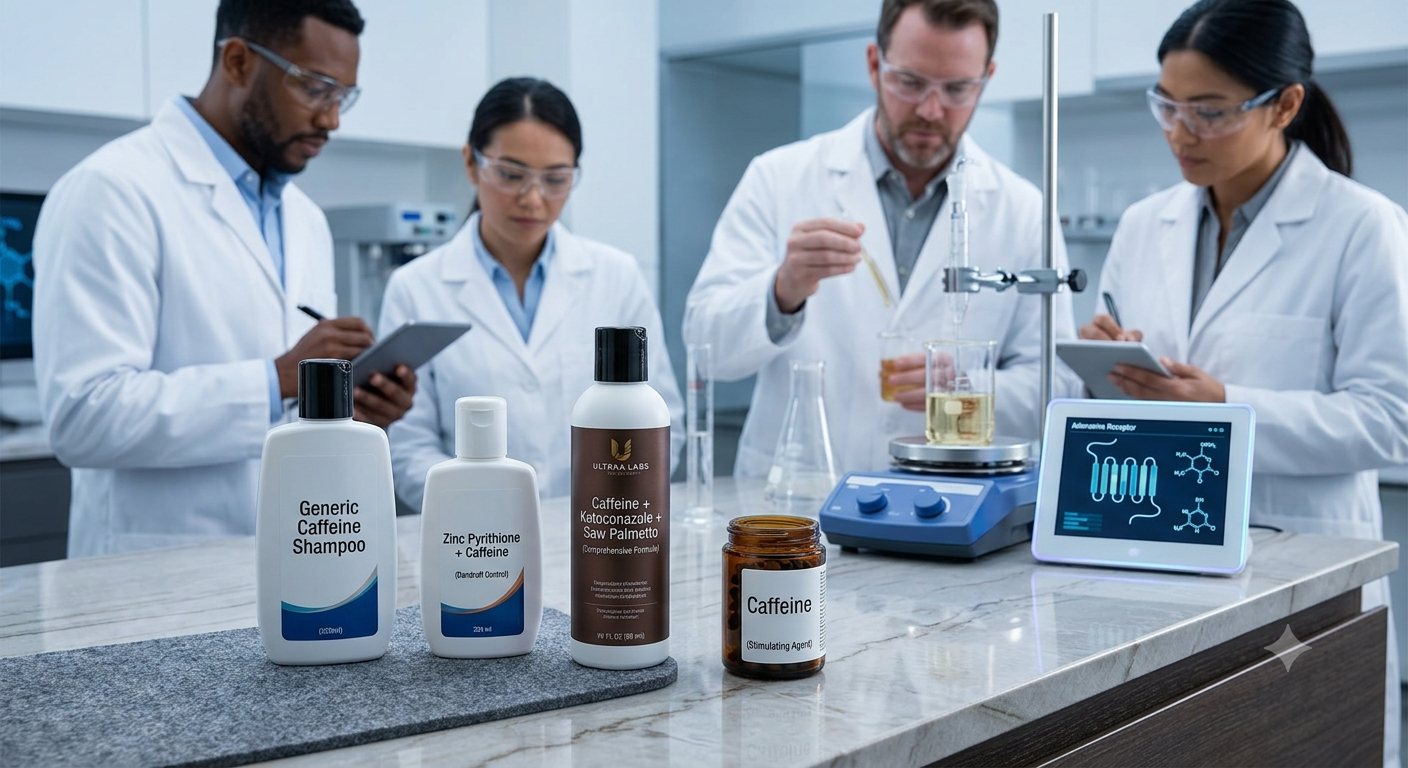
Caffeine shampoos occupy a specific and sometimes misunderstood position in the hair loss market. They are not supplements with weak evidence dressed up in a bottle. They are not medical treatments with decades of randomized controlled trial data behind them either. They sit somewhere in between — a product category with a plausible mechanism, genuinely interesting early research, and a set of reasonable but limited expectations that their marketing frequently oversteps.
Understanding exactly where caffeine shampoos fit — what they can realistically do, what they cannot, and which specific products are worth buying — makes the purchase decision considerably more straightforward than the competing claims across the category suggest.
Does Caffeine Actually Do Anything for Hair?
The evidence for caffeine’s effect on hair follicles is more interesting than most skeptics acknowledge — and considerably weaker than most caffeine shampoo marketing implies. The honest picture falls somewhere in between.
Several laboratory studies (in vitro) have shown that caffeine can stimulate hair follicle growth, extend the anagen phase, and partially counteract the negative effects of testosterone on hair follicles in isolated cell cultures. One research group found that caffeine-treated follicles showed measurably longer growth phases compared to controls — a finding that generated significant attention and formed the scientific backbone of most caffeine shampoo marketing.
The critical limitation is translating lab findings to real scalp use. In vitro studies use follicles bathed in caffeine solution for extended periods. A shampoo left on the scalp for two minutes before rinsing is a fundamentally different delivery context — less contact time, variable absorption through the skin barrier, and competing factors like sebum and product dilution that do not exist in a controlled lab environment.
The human clinical data is limited but not absent. Some small studies using leave-on caffeine formulations have found modest positive effects on hair density over several months. Shampoo-specific human trials are fewer and generally show smaller effects than leave-on equivalents — which is expected given the contact time difference.
The practical conclusion: caffeine shampoos likely provide some benefit at the scalp level through the stimulation and anti-androgenic mechanisms suggested by lab research, but the effect is modest, not well-quantified in large human trials, and not comparable to finasteride or minoxidil in terms of documented impact on androgenetic alopecia. They are a reasonable daily shampoo choice for men who want something with a plausible benefit story — not a treatment for pattern baldness.
What Caffeine Shampoo Can Realistically Do
- Provide scalp stimulation through the warming/vasodilation effect of caffeine on scalp microcirculation
- Potentially extend the growth phase of follicles through the adenosine receptor mechanisms identified in lab research
- Offer a cleansing, refreshing shampoo experience that supports scalp hygiene as part of a broader hair health routine
- Improve the scalp environment before applying topical treatments like minoxidil
What caffeine shampoo cannot do: meaningfully block DHT at the follicle level through two minutes of scalp contact, stop the progression of androgenetic alopecia, or replace evidence-based medical treatment for pattern baldness.
What to Look for in a Caffeine Shampoo
Caffeine Concentration and Position in Ingredient List
Not all caffeine shampoos contain meaningful amounts of caffeine. In most countries, cosmetic ingredient lists are ordered by concentration from highest to lowest. Caffeine appearing near the end of a long ingredient list — after preservatives and fragrance — is present in trace quantities unlikely to produce any scalp effect beyond marketing credibility. Caffeine listed in the first half of the ingredient list, or explicitly stated as a key percentage on the label, is a more meaningful signal.
Leave-on Time Recommendation
Products that recommend leaving the shampoo on for two to five minutes before rinsing are attempting to extend the contact time enough for some absorption to occur. This is more relevant for caffeine effectiveness than it is for standard cleansing shampoos. If you are buying specifically for the caffeine benefit, following the recommended leave-on time is more important than with a standard shampoo.
Supporting Ingredients
The best caffeine shampoos in this category combine caffeine with other ingredients that have independent scalp-health evidence — zinc pyrithione for dandruff control, niacinamide for scalp circulation, or ketoconazole (in some formulations) for anti-inflammatory and mild anti-androgenic benefit. These combinations create more comprehensive scalp support than caffeine alone.
Sulfate-Free Formulation
For a shampoo being used daily or near-daily by men concerned about hair health, sulfate-free formulations are preferable — they clean effectively without stripping the natural oils that support scalp barrier function. A shampoo that genuinely supports scalp health should not simultaneously irritate or over-dry the scalp with aggressive surfactants.
Product Reviews: Best Caffeine Shampoos for Men
Alpecin Caffeine Shampoo C1
Price: Approximately $12–$18 for 250ml | Key ingredient: Caffeine complex | Recommended leave-on: 2 minutes
Alpecin is the brand that built the caffeine shampoo category and remains its most recognized name globally. C1 is their original and best-known formulation — a daily-use shampoo with caffeine as the primary active ingredient and a dedicated two-minute leave-on recommendation backed by Alpecin’s own research program.
Alpecin has published proprietary research supporting caffeine penetration into the scalp and follicle stimulation, and while these studies are manufacturer-funded rather than independently replicated on the same scale, the underlying science is taken seriously enough that the product is frequently referenced in trichology discussions.
The formula contains sodium lauryl sulfate — a mild irritant for some men, worth noting for those with sensitive scalps. Men with scalp sensitivity may find Alpecin Double Effect (which adds zinc pyrithione for dandruff control) or Alpecin Sensitive more appropriate.
Best for: Men who want the most recognized, research-backed caffeine shampoo with a clear leave-on protocol and are not sensitive to sulfate formulations.
Verdict: The category leader for good reason. Not a hair loss treatment, but a well-formulated daily shampoo with a more credible evidence story than most alternatives. Follow the two-minute leave-on recommendation — users who rinse immediately are not getting the intended benefit.
Alpecin Double Effect Caffeine Shampoo
Price: Approximately $14–$20 for 200ml | Key ingredients: Caffeine complex + zinc pyrithione | Recommended leave-on: 2 minutes
The Double Effect adds zinc pyrithione — the active ingredient in anti-dandruff shampoos like Head and Shoulders — to the C1 caffeine formula. For men dealing with both hair thinning concerns and any degree of scalp flaking, oiliness, or seborrheic dermatitis, this combination covers more ground than C1 alone.
Zinc pyrithione has independent scalp health evidence behind it, and the combination of caffeine stimulation plus dandruff control in a single product is genuinely useful rather than a marketing addition. This is one of the better-designed multi-benefit shampoos in the category.
Best for: Men who want caffeine shampoo benefits alongside active dandruff or scalp flaking control without using two separate products.
Verdict: Worth the small premium over C1 if scalp flaking is at all present. A genuine two-ingredient benefit rather than a marketing combination with only one meaningful active component.
Plantur 21 Caffeine Shampoo
Price: Approximately $10–$15 for 250ml | Key ingredients: Caffeine, niacinamide, zinc | Recommended leave-on: 2 minutes
Plantur 21 comes from the same manufacturer as Alpecin and applies a similar caffeine-focused approach with the addition of niacinamide (vitamin B3) and zinc. Niacinamide has evidence for improving scalp circulation and reducing inflammation — a useful addition to the caffeine mechanism, particularly for men whose thinning may have an inflammatory component.
The formulation is positioned slightly differently from Alpecin C1 — marketed more toward overall hair strength and thickness than specifically toward hair loss — but the active ingredient profile is arguably more comprehensive for scalp health.
Best for: Men who want caffeine alongside niacinamide and zinc for a broader scalp health approach, or those who find Alpecin too astringent for daily use.
Verdict: A well-rounded formulation at a competitive price. The niacinamide addition is a genuine value-add. Worth considering as an alternative to C1 for men who want a slightly more comprehensive ingredient profile.
Ultrax Labs Hair Surge Caffeine Shampoo
Price: Approximately $35–$45 for 8oz | Key ingredients: Caffeine, ketoconazole, saw palmetto | Recommended leave-on: 2 minutes
Ultrax Labs Hair Surge is one of the most discussed caffeine shampoos in men’s hair loss communities, primarily because of its combination of caffeine with ketoconazole and saw palmetto — an attempt to address multiple hair loss mechanisms in a single product. Ketoconazole has the strongest evidence of any shampoo ingredient for hair loss relevance, so its inclusion here is meaningful rather than cosmetic.
The price is the main consideration — at $35 to $45 per bottle, Hair Surge is significantly more expensive than Alpecin. Whether the addition of ketoconazole and saw palmetto justifies that premium depends on whether you are already using Nizoral (ketoconazole shampoo) separately. If you are not, Hair Surge provides a more convenient single-product option. If you already use Nizoral two to three times per week, the overlap with Hair Surge reduces its additional value considerably.
Best for: Men who want caffeine, ketoconazole, and saw palmetto in one product and prefer consolidating to a single shampoo rather than rotating between multiple products.
Verdict: The most comprehensive formula in this category, with the most expensive price to match. Worth the premium if it replaces separate ketoconazole shampoo use and you value the consolidated routine. Less compelling if you already use Nizoral separately, in which case a cheaper caffeine shampoo alongside Nizoral achieves similar coverage at lower total cost.
Product Comparison
| Product | Price | Key Active Ingredients | Sulfate-Free | Best For |
|---|---|---|---|---|
| Alpecin C1 | ~$12–$18 | Caffeine complex | No | Best value caffeine shampoo, daily use |
| Alpecin Double Effect | ~$14–$20 | Caffeine + zinc pyrithione | No | Caffeine + dandruff control combined |
| Plantur 21 | ~$10–$15 | Caffeine + niacinamide + zinc | No | Broader scalp health at lowest price |
| Ultrax Labs Hair Surge | ~$35–$45 | Caffeine + ketoconazole + saw palmetto | Yes | Most comprehensive formula, single product routine |
How Caffeine Shampoo Fits Into a Broader Hair Routine
The most evidence-aligned way to use a caffeine shampoo is as a daily cleanser that supports scalp health while other treatments address the primary cause of hair loss. For men using finasteride and minoxidil, a caffeine shampoo used to clean the scalp before applying minoxidil creates better absorption conditions — a clean scalp free of sebum and product buildup allows more consistent topical penetration.
For men who are not using prescription treatments and want a drug-free approach, caffeine shampoo combined with Nizoral (two to three times per week, alternating with the caffeine shampoo on other days) and a derma roller represents the most evidence-backed non-prescription routine available. None of these individually approaches the results of finasteride or minoxidil, but the combination covers more bases than any single product alone.
Frequently Asked Questions
Does caffeine shampoo actually work for hair loss?
The evidence suggests caffeine shampoo produces modest scalp-level stimulation with some benefit for follicle health, particularly when left on for the recommended time. It is not a treatment for male pattern baldness and should not be expected to produce results comparable to finasteride or minoxidil. As a daily shampoo with a plausible benefit story, it is a reasonable choice.
How long should you leave caffeine shampoo on?
The manufacturers of the most studied products recommend two minutes. This extends scalp contact time enough for some absorption to occur — rinsing immediately reduces the potential benefit to minimal. Set a timer if needed; two minutes during a shower is easy to underestimate.
Is Alpecin the best caffeine shampoo?
Alpecin C1 is the category benchmark in terms of brand recognition and proprietary research backing. For men who want a broader formula with ketoconazole included, Ultrax Labs Hair Surge covers more mechanisms in one product. The best choice depends on what else is already in your routine.
Can I use caffeine shampoo every day?
Yes — all the products reviewed here are formulated for daily use. Men who also use Nizoral (ketoconazole shampoo) two to three times per week should alternate: Nizoral on treatment days, caffeine shampoo on remaining days.
Should I use caffeine shampoo before or after applying minoxidil?
Before. Shower with caffeine shampoo, rinse thoroughly, dry the scalp, then apply minoxidil to a clean dry scalp. This sequence maximizes minoxidil absorption and avoids product interactions.
Bottom Line
Caffeine shampoos are worth buying as daily cleansers for men who care about scalp health and want something with a plausible mechanism behind it — as long as the expectation is “good daily shampoo with some follicle-level benefit” rather than “hair loss treatment.” At $10 to $20 per bottle, Alpecin C1 or Plantur 21 represent fair value for what they deliver. At $35 to $45, Hair Surge makes most sense for men who want the ketoconazole benefit included rather than managed separately.
Use any of them consistently, leave them on for two minutes, and treat them as the scalp hygiene layer of a broader routine — not as the treatment layer. That positioning is what the evidence actually supports, and it is the one that will produce the results you are looking for.
Written by ModernHairRecovery Editorial Team.