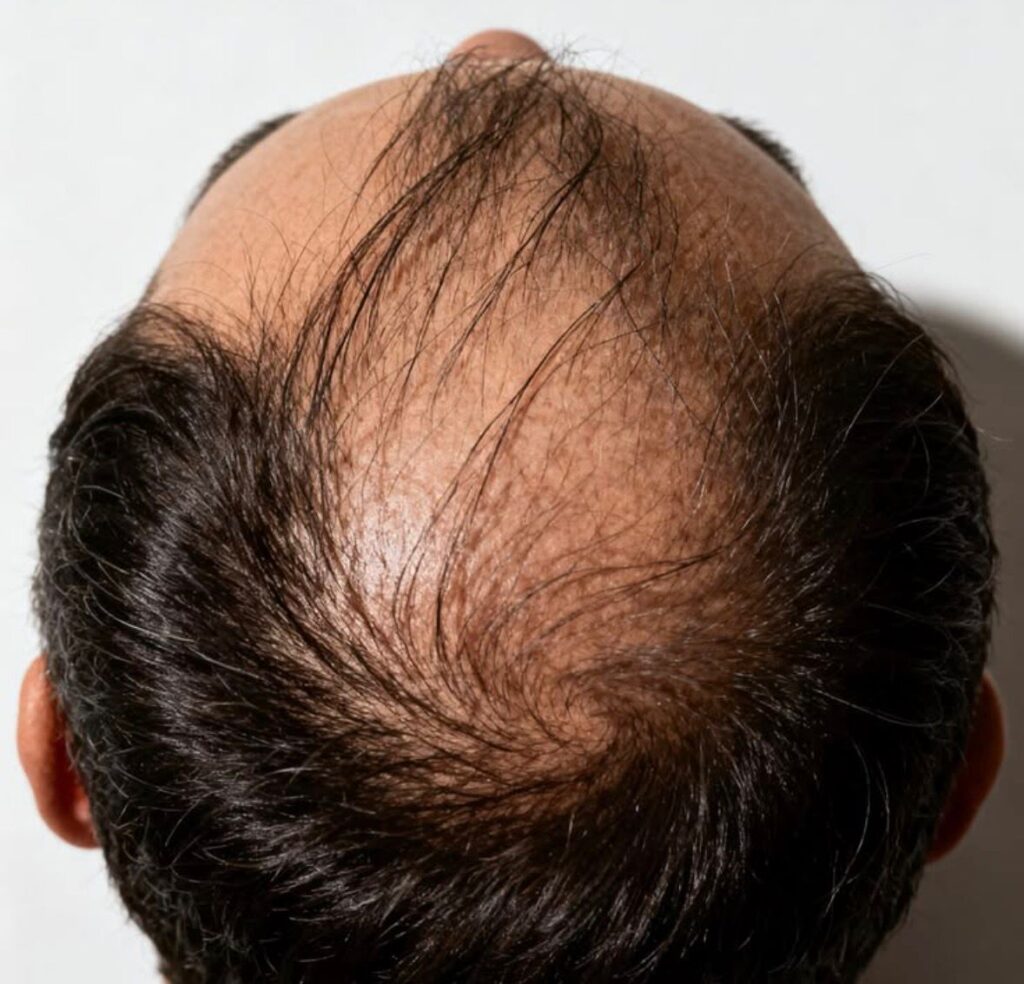
For many men, hair loss seems to appear suddenly. One day your hair looks normal — then you notice extra shedding in the shower, thinning near the temples, or a widening crown under bright light.
This often leads to an important question: at what age does male pattern baldness actually start?
The answer varies from person to person, but male pattern baldness can begin much earlier than many men expect. Some notice the first signs in their late teens or early twenties, while others maintain most of their hair into middle age.
Understanding when hair loss usually starts, what causes it, and how it progresses can help you recognize the early warning signs and make informed decisions before significant thinning occurs.
What Is Male Pattern Baldness?
Male pattern baldness, medically known as androgenetic alopecia, is the most common type of hair loss in men. It is primarily caused by a combination of genetics, hormones, age, and sensitivity to DHT.
This condition follows a characteristic pattern: a receding hairline, thinning at the crown, and a gradual loss of density. Over time, hair follicles become smaller and produce thinner, weaker hair until growth may stop completely.
At What Age Does Male Pattern Baldness Usually Start?
Male pattern baldness can begin surprisingly early. For many men, the first signs appear between the ages of 18 and 30. However, the timing varies widely depending on genetics and individual sensitivity to DHT.
| Age Range | What Typically Happens |
|---|---|
| Late teens (17–19) | Earliest signs may appear in men with strong genetic predisposition |
| 20s | Many men develop visible temple recession or crown thinning |
| 35 | Approximately two-thirds of American men show some degree of hair loss |
| 50+ | More than half of men experience noticeable thinning |
Can Male Pattern Baldness Start at 18?
Yes, it can. Although aggressive hair loss at 18 is less common, some men begin developing early signs shortly after puberty. Typical early symptoms may include temple recession, excessive shedding, thinner hair texture, and a visible scalp under harsh lighting.
Early-onset hair loss is often linked to strong genetic predisposition and higher follicle sensitivity to DHT.
Why Does Male Pattern Baldness Happen?
The primary hormone involved in male pattern baldness is dihydrotestosterone (DHT). DHT is produced when testosterone is converted by an enzyme called 5-alpha reductase. In genetically susceptible men, DHT binds to hair follicles and gradually causes them to shrink.
As this process unfolds, the growth phase becomes shorter, hair strands become finer, follicles miniaturize over time, and hair density decreases progressively. This process usually develops slowly over several years.
Early Signs of Male Pattern Baldness
Recognizing early symptoms is important because treatment tends to work better before significant follicle miniaturization occurs. Common early signs include:
- Receding hairline near the temples
- Thinning at the crown
- More hair shedding during washing
- Loss of hair density
- Hair appearing flatter or weaker
- Difficulty styling hair as before
These changes are often gradual, making them easy to overlook initially.
Does Hair Loss Always Progress Quickly?
No. Hair loss progression varies significantly between individuals. Some men experience slow, mild recession over decades, while others develop advanced baldness within only a few years.
Generally, earlier onset hair loss is associated with more aggressive progression, although this is not always the case. Factors that influence how quickly hair loss advances include genetics, DHT sensitivity, age of onset, hormonal factors, and overall scalp health.
Can You Predict If You Will Go Bald?
There is no perfect way to predict future hair loss, but family history can provide important clues. Your risk may increase if your father experienced early hair loss, your maternal grandfather was bald, or multiple male relatives have androgenetic alopecia.
However, genetics are complex. Some men with strong family histories maintain thick hair, while others develop hair loss despite limited family patterns.
What Is a Mature Hairline?
Not every change in the hairline means balding. Many men naturally develop a mature hairline between the late teens and early adulthood. A mature hairline usually moves slightly higher, creates mild temple recession, and then stabilizes.
In contrast, male pattern baldness typically continues progressing over time rather than stabilizing.
Can Stress Cause Early Baldness?
Stress can contribute to temporary shedding, known as telogen effluvium, but it does not directly cause classic male pattern baldness. However, stress may worsen existing hair loss in genetically predisposed individuals.
Other factors that may contribute to increased shedding include poor nutrition, sleep deprivation, illness, rapid weight loss, and inflammation.
Can Early Treatment Help?
Yes — early treatment is often more effective than waiting until hair loss becomes advanced. Once follicles become severely miniaturized, regrowth becomes much harder.
Finasteride
Finasteride works by reducing DHT levels in the scalp. Studies show it can slow hair loss progression in many men and help preserve existing hair over the long term.
Minoxidil
Minoxidil helps prolong the growth phase of hair follicles and may improve density over time. Results typically require several months of consistent use.
Hair Transplant Surgery
For advanced cases, surgical restoration may provide more substantial cosmetic improvement when non-surgical options have not been sufficient.
Pros and Cons of Starting Treatment Early
| Pros | Cons |
|---|---|
| Better chance of preserving hair | Requires long-term consistency |
| May slow progression significantly | Results vary between individuals |
| Can maintain density for years | Some treatments may cause side effects |
| Less need for aggressive interventions later | Costs accumulate over time |
Cost Considerations
| Treatment | Estimated Cost |
|---|---|
| Minoxidil | $20–$60 per month |
| Finasteride | $10–$80 per month |
| Laser therapy devices | $200–$1,000 (one-time) |
| Hair transplant surgery | $4,000–$15,000+ |
Most treatments require ongoing maintenance to sustain results.
Frequently Asked Questions
What is the earliest age male pattern baldness can start?
Some men notice early signs in their late teens, especially if they have a strong genetic predisposition. However, this is less common than onset in the twenties or thirties.
Does a receding hairline always mean baldness?
No. A mature hairline is normal in many men and does not always progress into significant baldness. The key difference is whether the recession continues over time or stabilizes.
Can male pattern baldness stop on its own?
Typically, androgenetic alopecia is progressive without treatment, although progression speed varies significantly between individuals.
Is hair loss in your 20s normal?
Yes. Many men begin developing noticeable thinning or recession during their twenties. It is one of the most common periods for early male pattern baldness to appear.
Can you slow down genetic hair loss?
Evidence-based treatments like finasteride and minoxidil may help slow progression and preserve hair, particularly when started before significant thinning has occurred.
Final Thoughts
For many men, the first signs of male pattern baldness appear between the late teens and early thirties, although genetics, hormones, and individual DHT sensitivity all influence the timing.
Hair loss is extremely common and often develops gradually over time. Recognizing the early signs can make a major difference because treatments tend to work best before significant thinning occurs.
If you are concerned about hair loss, early evaluation and evidence-based treatment options may help preserve your hair and slow progression for years to come.
Written by ModernHairRecovery Editorial Team.