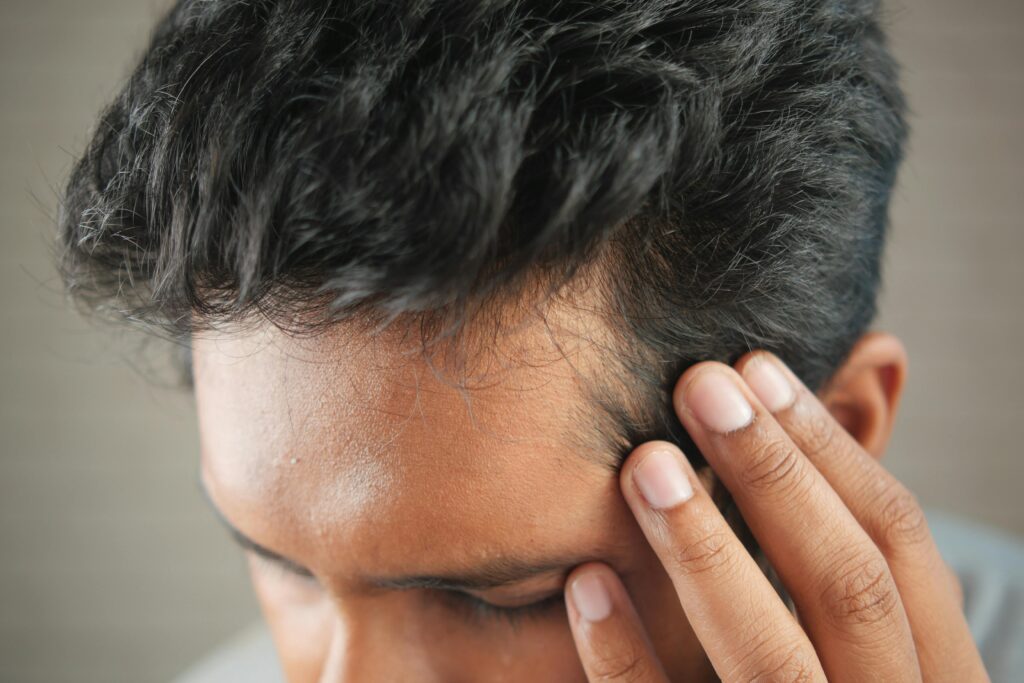
At some point, someone told you that wearing a hat too often would make you go bald. Maybe it was a parent, a coach, or just something you absorbed growing up as an unquestioned fact. It has the ring of logic to it — something covering your scalp all day, blocking airflow, pulling on your hair. Surely that cannot be good.
The problem is that this belief has been passed down for decades without much scrutiny. And when you actually examine what causes hair loss at a biological level, hats barely enter the picture.
So let us settle this properly — not with a dismissive “it is just a myth” and nothing else, but with a clear explanation of what hats actually do to your scalp, under what conditions they could theoretically be a problem, and what is genuinely responsible for the hair loss that hat-wearing often gets blamed for.
Where Did This Myth Come From?
The hat-baldness connection likely gained traction because of a pattern people noticed in real life: athletes who wore helmets or caps daily seemed to lose hair faster than others. Soldiers who wore military hats for years. Men whose fathers wore the same worn-out baseball cap every weekend — and who also happened to go bald.
The logical leap was understandable but flawed. The hat was visible and consistent. The genetics were invisible. So the hat got the blame.
There is also a version of this theory that sounds more scientific: that hats reduce blood circulation to the scalp, cutting off oxygen and nutrients to hair follicles. It sounds plausible until you consider that the scalp has one of the richest blood supplies of any area of the body, and a hat sitting on your head applies nowhere near enough pressure to meaningfully restrict that circulation.
What Actually Causes Male Pattern Baldness
To understand why hats are not the culprit, you need a clear picture of what actually is. Male pattern baldness — androgenetic alopecia — is driven by two things working together: genetics and a hormone called DHT (dihydrotestosterone).
DHT is produced when testosterone is converted by an enzyme called 5-alpha reductase. In men with a genetic predisposition, DHT binds to receptors in scalp hair follicles and gradually causes them to shrink — a process called miniaturization. Over time, those follicles produce progressively thinner, weaker hair until they eventually stop producing visible hair at all.
This process happens entirely at the cellular level, inside the follicle itself. It is determined by the genes you inherited and how sensitively your follicles respond to DHT. A hat sitting on top of your head has no mechanism to interfere with any part of this process. It cannot alter your DHT levels. It cannot change your androgen receptor sensitivity. It does not reach the follicle at all.
What Does a Hat Actually Do to Your Hair?
Hats do have real effects on hair — just not the ones people worry about. Understanding what they actually do makes it easier to separate genuine concerns from mythology.
They Can Cause Friction and Breakage
A hat that fits tightly and is worn daily creates consistent friction against the hair shaft. Over time, this friction can cause mechanical breakage — the hair strand snaps at a point of repeated stress rather than falling out from the root. The result can look like thinning, but it is damage to the hair shaft, not loss of the follicle. Remove the source of friction, and new hair grows back normally from the intact follicle beneath.
This is an important distinction: broken hair and lost hair look similar in the mirror but have completely different causes and outcomes.
They Can Affect Scalp Environment
A hat worn for extended hours — particularly one made from non-breathable synthetic material — can trap heat and moisture against the scalp. This creates a warmer, more humid environment that may contribute to sweat buildup, excess oil, and in some cases mild scalp irritation or dandruff.
None of these conditions cause androgenetic alopecia. But chronic scalp inflammation, if left unaddressed over a long period, can create a less-than-ideal environment for follicle health in general. This is a marginal effect at best — and one that is easily managed by choosing breathable hat materials and washing the hat regularly.
Traction Alopecia: The One Legitimate Concern
There is one scenario where a head covering genuinely can contribute to hair loss: traction alopecia. This condition occurs when consistent, prolonged tension is applied to hair follicles — typically from tight hairstyles, headbands, or in some occupational cases, helmets or tight-fitting hats worn with a lot of friction over years.
Traction alopecia is most commonly associated with tight braids, ponytails, and extensions. It does not typically result from wearing a regular baseball cap or wool hat. For a hat to contribute to traction alopecia, it would need to be extremely tight, worn almost constantly, and pulling on the hair at the follicle level — not just resting on the scalp.
If you are wearing a hat that fits normally and is not causing pain or tension, traction alopecia is not a realistic concern.
The Evidence: What Research Actually Says
No peer-reviewed study has established a causal link between regular hat-wearing and androgenetic alopecia. The scientific consensus on what causes male pattern baldness is well-established — genetics and DHT — and hats do not appear in that literature as a contributing factor.
One way to think about it: if hats caused baldness, we would expect to see dramatically higher rates of hair loss among groups with high daily hat use — military personnel, professional athletes, construction workers who wear hard hats. No such pattern has been observed or documented in the research literature.
Meanwhile, identical twins studies — one of the most powerful tools for separating genetics from environment — consistently show that genetic factors account for the overwhelming majority of hair loss risk. Lifestyle and environmental factors, including what you wear on your head, play a marginal role at most.
Why the Myth Persists
The timing of hair loss is part of the problem. Male pattern baldness often becomes noticeable in the twenties and thirties — precisely the years when many men wear hats most frequently. The two things coincide, and the human brain is pattern-seeking by nature. Correlation feels like causation, especially when the alternative explanation — that your genes were always going to do this regardless — is harder to accept.
There is also the visibility factor. You can see the hat. You cannot see your DHT levels or your androgen receptor sensitivity. When something goes wrong, we tend to blame what we can point to.
Practical Guidelines: Wearing Hats Without Worry
If you enjoy wearing hats and have been avoiding them out of concern for your hair, the evidence says you can stop worrying. A few sensible habits are worth keeping in mind regardless:
- Choose breathable materials. Cotton and wool allow more airflow than synthetic fabrics. If you wear a hat for hours at a time, this makes the scalp environment more comfortable.
- Make sure the fit is comfortable, not tight. A hat that leaves a visible pressure mark on your forehead after removal is too tight. It is not causing baldness, but it may cause friction and discomfort over time.
- Wash your hat regularly. A hat that accumulates sweat and oil over weeks becomes a less-than-clean surface against your scalp. This is basic hygiene rather than a hair loss concern.
- Do not wear the same hat all day every day without a break. Not because of hair loss risk, but because scalp skin benefits from exposure to air like any other skin on your body.
What to Actually Pay Attention To
If you are noticing genuine thinning — a hairline that has shifted, a crown that looks more visible in photos than it used to, hair strands that feel progressively finer — the cause is almost certainly not your hat. The causes worth investigating are the ones with actual scientific support: genetics, DHT sensitivity, stress, nutritional deficiencies, and scalp health.
The distinction matters because it points you toward the right response. Worrying about your hat and doing nothing else means ignoring the actual process happening at your follicles. Understanding that DHT is the driver — and that early intervention with evidence-based treatments can slow or halt that process — gives you something actionable to work with.
Frequently Asked Questions
Does wearing a hat every day cause hair loss?
No. Daily hat use does not cause androgenetic alopecia. It may cause minor friction or affect scalp comfort, but it has no effect on the hormonal and genetic process responsible for male pattern baldness.
Can a tight hat cause baldness?
An extremely tight hat worn constantly over years could theoretically contribute to traction alopecia, but this is a very different condition from pattern baldness and requires significant sustained tension on the follicle — far beyond what a typical hat creates.
Do hats block oxygen to hair follicles?
No. Hair follicles receive oxygen through the bloodstream, not from the air above the scalp. A hat on your head does not reduce blood flow to follicles in any meaningful way.
Why does my hair look thinner after wearing a hat?
This is usually a styling effect — hats flatten hair and compress its volume temporarily. The hair returns to its normal appearance once it is washed and dried. If thinning is genuinely visible and persistent regardless of hats, the cause is worth investigating separately.
Should I stop wearing hats if I am losing hair?
There is no scientific reason to stop. Removing the hat will not slow or reverse hair loss if the underlying cause is genetic. If anything, focusing on the hat may distract from the actual causes worth addressing.
Final Thoughts
Does wearing a hat cause hair loss? The honest, evidence-based answer is no — not in any meaningful way.
Hats can flatten hair, cause friction if too tight, and affect scalp comfort in warm weather. What they cannot do is alter your genetics, raise your DHT levels, or trigger the follicle miniaturization process behind male pattern baldness. The biology simply does not work that way.
If you are noticing real changes in your hairline or density, the hat is not the explanation worth spending time on. The more useful question is whether those changes follow the temple-and-crown pattern of androgenetic alopecia — because if they do, there are evidence-based options available that actually address the cause.
Wear the hat. Investigate the DHT.
Written by ModernHairRecovery Editorial Team.