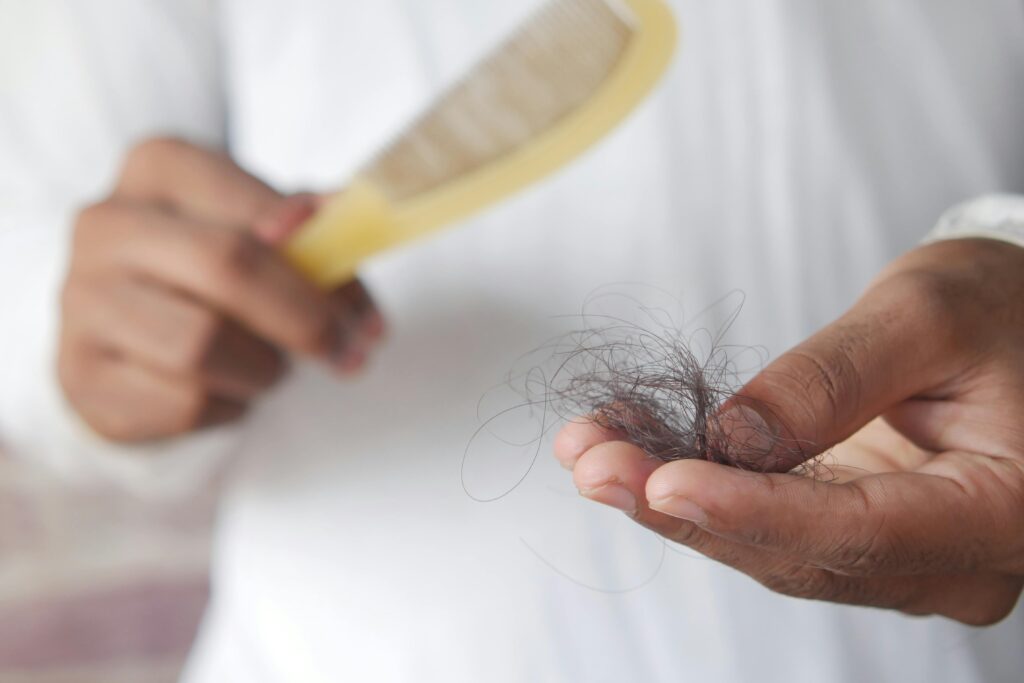
Your twenties are not supposed to be when you start worrying about your hair. And yet here you are — noticing that your shower drain looks different, that your hairline sits slightly higher than it used to, or that something about your hair just feels less substantial than it did a year ago.
First, you are not imagining it — and you are far from alone. Hair thinning in your 20s is more common among men than most people realize, and it is almost never discussed until it becomes impossible to ignore.
Second, the cause matters enormously. Some types of hair thinning at this age are temporary and resolve on their own. Others are the early stages of a permanent process that responds much better to intervention now than it will in five years. Knowing which one you are dealing with is the starting point for everything else.
Is Hair Thinning in Your 20s Normal?
Yes — more normal than the silence around it suggests. Research indicates that a meaningful percentage of men begin showing signs of androgenetic alopecia before age 30, and some notice the first changes before 21. The idea that hair loss only happens to middle-aged men is simply not accurate.
That said, “common” does not automatically mean “genetic” or “permanent.” Several different conditions can cause thinning in young men, and they require different responses. The sections below cover the most likely explanations, from most to least common.
The Most Likely Causes
1. Male Pattern Baldness Starting Early
The most common reason for hair thinning in men in their 20s is androgenetic alopecia — male pattern baldness — beginning earlier than expected. This is a genetic and hormonal condition driven by the way certain scalp follicles respond to DHT (dihydrotestosterone), a hormone derived from testosterone.
In men with this predisposition, DHT causes follicles at the temples and crown to gradually miniaturize. Hair does not disappear overnight — it becomes progressively thinner, weaker, and shorter with each growth cycle until the follicle eventually stops producing visible hair altogether.
The defining characteristic of early male pattern baldness is its location. It concentrates at the temples and crown, follows a recognizable pattern, and progresses over time rather than staying stable. If that description matches what you are seeing, genetics is almost certainly involved.
2. Stress and Telogen Effluvium
Your twenties can be genuinely stressful — financially, professionally, socially. Significant physical or emotional stress can push a larger-than-normal number of hair follicles into the resting phase simultaneously, causing a wave of shedding two to three months later. This is called telogen effluvium.
The shedding from telogen effluvium looks different from pattern baldness. It tends to be diffuse — spread evenly across the scalp rather than concentrated at the temples or crown — and it is usually triggered by a specific event: a period of burnout, illness, extreme dieting, surgery, or prolonged poor sleep.
The good news is that telogen effluvium is typically temporary. Once the trigger resolves and the body stabilizes, most men see shedding slow and density gradually return over the following months. The frustrating part is that this takes time, and the recovery is rarely as fast as you want it to be.
3. Nutritional Deficiencies
Hair follicles have high nutritional demands. When the body is running low on certain key nutrients — whether from a restrictive diet, poor eating habits, or an underlying absorption issue — hair quality is one of the first things to suffer.
The nutrients most commonly linked to hair thinning in young men include iron, zinc, vitamin D, protein, and omega-3 fatty acids. Iron deficiency in particular can cause significant shedding that is often mistaken for genetic hair loss.
If your diet has been consistently poor, or if you have recently lost weight rapidly, a blood test to check these levels is a worthwhile first step before assuming the cause is genetic.
4. Scalp Health Issues
Conditions like seborrheic dermatitis (dandruff at its more severe end), scalp psoriasis, or folliculitis can create chronic inflammation around hair follicles. Over time, that inflammation may impair healthy hair growth and contribute to thinning — particularly if the scalp condition has been present and untreated for a long period.
This type of thinning is often accompanied by visible scalp symptoms: flaking, redness, itching, or oiliness. If your thinning comes with any of these, the scalp condition may be a contributing factor worth addressing directly.
5. Lifestyle Factors
Chronic sleep deprivation, smoking, high alcohol consumption, and sustained high stress all affect hormonal balance, inflammation levels, and the body’s ability to maintain healthy tissue — including hair follicles. None of these alone typically cause permanent baldness in men without a genetic predisposition, but they can meaningfully worsen thinning that is already in motion.
How to Tell What Is Actually Causing Your Thinning
The pattern and behavior of your hair loss is the most useful diagnostic tool available before seeing a professional.
| What You Are Noticing | More Likely Cause |
|---|---|
| Recession at temples and thinning crown, gradually worsening | Male pattern baldness |
| Sudden diffuse shedding across the whole scalp | Telogen effluvium (stress or trigger) |
| General thinning with low energy, fatigue, or poor diet | Nutritional deficiency |
| Thinning with itching, flaking, or scalp redness | Scalp condition / inflammation |
| Patchy, uneven bald spots | Alopecia areata (autoimmune) — see a doctor |
| Thinning that started during or after a highly stressful period | Telogen effluvium |
These are not perfect rules — more than one cause can be present at once, and male pattern baldness can be triggered into more visible activity by stress or nutritional dips. But the pattern is usually the clearest clue available.
Could It Just Be a Mature Hairline?
Worth mentioning, because this causes genuine confusion for men in their late teens and early twenties. The juvenile hairline — the one you had as a child or adolescent — typically rounds out and sits quite low on the forehead. As you move into adulthood, most men’s hairlines naturally shift slightly higher and develop mild temple recession. This is a mature hairline, and it is not hair loss.
The difference between a maturing hairline and early pattern baldness is straightforward in theory but harder to see in your own mirror: a mature hairline stabilizes and stops changing, while early pattern baldness continues to progress. Give it six to twelve months of consistent observation. If nothing is moving, it was probably maturation. If it keeps changing, it is not.
Does a Family History of Baldness Seal Your Fate?
Not entirely, but it is the most meaningful predictor available. If your father lost hair early, your maternal grandfather was bald, or multiple male relatives across both sides thinned significantly, your risk is meaningfully higher than average. The genetic component of androgenetic alopecia is real and well-established.
That said, genetics in this area are genuinely complex. Multiple genes across multiple chromosomes influence DHT sensitivity, follicle resilience, and the age at which loss begins. Men from the same family can have dramatically different outcomes. Family history raises the probability — it does not determine the outcome.
Can Hair Thinning in Your 20s Be Reversed?
| Cause | Can It Improve? | What Helps |
|---|---|---|
| Telogen effluvium | Yes — usually resolves naturally | Addressing the trigger, time, nutrition |
| Nutritional deficiency | Yes — with correction | Identifying and correcting the deficiency |
| Scalp inflammation | Partially — with treatment | Treating the underlying scalp condition |
| Male pattern baldness | Progression can be slowed | Finasteride, minoxidil, early intervention |
| Advanced follicle miniaturization | Difficult to reverse fully | Hair transplant may be the best option |
The consistent theme across all of these: acting earlier consistently produces better outcomes than waiting. Whether the cause is temporary or genetic, the earlier you have accurate information, the more options remain available to you.
What Should You Actually Do Next?
Start by observing and documenting. Take photos of your hairline, temples, and crown under consistent lighting every four to six weeks. This is the most honest tool available — your eyes adapt to gradual change, but photos do not.
If the photos show clear progression over three to six months, or if the thinning is accompanied by other symptoms like fatigue or scalp irritation, a visit to a dermatologist is genuinely worthwhile. A blood panel can rule out nutritional and hormonal causes, and a scalp examination can assess whether miniaturization is already underway.
If the cause turns out to be stress or nutrition, the path forward is lifestyle-based and manageable. If it is early androgenetic alopecia, there are evidence-based options that work best precisely when started at this stage — not years from now.
Frequently Asked Questions
Is it normal for hair to thin at 20?
Yes. A significant number of men begin noticing early thinning or recession in their twenties. It is more common than most people expect, though the cause and pace of progression vary widely between individuals.
Can stress cause hair thinning in your 20s?
Yes. Telogen effluvium triggered by emotional or physical stress is one of the most common causes of sudden thinning in young men. It is usually temporary and often resolves within six to twelve months once the trigger improves.
How do I know if I am balding or just shedding?
Pattern baldness concentrates at the temples and crown, progresses over time, and involves hair strands becoming progressively finer. Temporary shedding tends to be diffuse across the whole scalp and does not follow a defined pattern. Comparing photos over several months is the most reliable way to tell the difference.
Can hair thinning in your 20s grow back?
It depends on the cause. Thinning from stress, illness, or nutritional deficiencies often improves naturally once the underlying issue is corrected. Genetic hair loss requires treatment to slow progression, and regrowth becomes more difficult the longer follicles have been miniaturizing.
Does testosterone cause hair thinning in young men?
Not directly. Hair loss is more closely linked to DHT sensitivity than to overall testosterone levels. A man with average testosterone but highly reactive follicle receptors may thin significantly, while another with higher testosterone and low sensitivity may not. The hormone level matters less than the follicle’s response to it.
Final Thoughts
Hair thinning in your 20s is uncomfortable to notice and easy to overthink. But the fact that you are paying attention now — rather than five or ten years from now — is genuinely useful, whatever the cause turns out to be.
If it is temporary, you will have the reassurance of knowing that. If it is early pattern baldness, you are at the stage where the most effective interventions are still fully available to you. Either way, having accurate information now is better than the alternative.
The goal is not to panic — it is to understand what is actually happening and make whatever decision feels right for you with clear eyes.
Written by ModernHairRecovery Editorial Team.