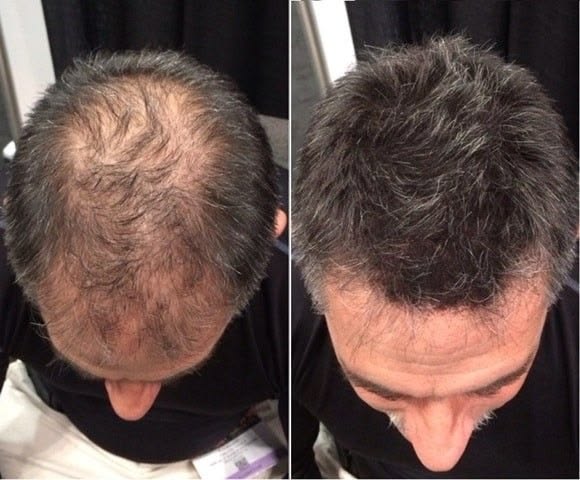
Walk into any pharmacy or scroll through any health retailer and you will find dozens of products all claiming to stop hair loss, regrow hair, or both. Most of them are relying on the anxiety around hair loss to sell products that the clinical evidence does not support. A handful are genuinely worth buying.
This guide cuts through the noise. Every product category here is ranked by evidence strength, with practical buying guidance for each — what to look for, what to avoid, approximate costs, and which type of man each option realistically suits.
How This Ranking Was Built
Products and treatments are ranked by the strength and volume of clinical evidence behind them, not by advertising spend or online popularity. A product with decades of randomized controlled trial data ranks above one with a compelling before-and-after photo campaign, regardless of how widely either is sold.
| Treatment / Product Type | Evidence Level | Prescription | Approx. Monthly Cost |
|---|---|---|---|
| Oral finasteride 1mg | Very Strong | Yes | $10–$40 |
| Topical minoxidil 5% | Very Strong | No | $15–$40 |
| Finasteride + minoxidil combined | Very Strong | Partial | $25–$80 |
| Topical finasteride | Strong — growing | Yes | $30–$100+ |
| Oral minoxidil (low dose) | Strong — growing | Yes | $10–$40 + consult |
| Hair transplant surgery | Strong (surgical) | Yes | $4,000–$15,000+ (one-time) |
| Microneedling devices | Moderate (adjunct) | No | $20–$200 device cost |
| Low-level laser therapy devices | Moderate | No | $200–$1,000 device cost |
| Natural DHT blocker supplements | Weak | No | $20–$60 |
#1 — Oral Finasteride 1mg
The single most evidence-backed product category for male androgenetic alopecia. Finasteride inhibits 5-alpha reductase, the enzyme that converts testosterone into DHT — the hormone responsible for shrinking hair follicles in genetically susceptible men. At 1mg daily, it reduces circulating DHT by 60 to 70 percent, directly interrupting the miniaturization process at its source.
Decades of long-term study data consistently show the majority of men either stabilize hair loss or achieve measurable regrowth over one to two years, with effectiveness maintained for ten years or more in extension studies. Generic finasteride is widely available at low cost — typically $10 to $40 per month — making it also one of the better value propositions in hair loss treatment.
What to buy: Generic finasteride 1mg is pharmacologically identical to branded versions and significantly cheaper. Available through most pharmacies with a prescription, and through several telehealth platforms that can prescribe and ship directly.
Who it suits: Men with early to moderate androgenetic alopecia who are appropriate prescription candidates and comfortable with a systemic medication commitment.
What to watch for: Sexual side effects occur in a minority of users and are typically reversible on stopping. PSA levels are reduced by approximately 50 percent on finasteride — inform your doctor before any prostate screening.
#2 — Topical Minoxidil 5%
The most accessible evidence-backed hair loss product available without a prescription. Minoxidil 5% applied once or twice daily to the scalp prolongs the anagen growth phase and improves follicle environment, producing measurable density improvements in the majority of consistent users over six to twelve months.
It does not address DHT, which means it works around the cause of androgenetic alopecia rather than on it — making it highly complementary to finasteride and less powerful as a standalone for progressive pattern loss.
What to buy: Generic 5% foam or liquid solution. The foam formulation is generally preferred for its faster drying time and lower incidence of scalp irritation (no propylene glycol). Brand names like Rogaine charge significantly more for the same active ingredient at the same concentration. Generic versions at $15 to $25 per month are functionally identical.
Who it suits: Men at any stage of hair loss who want to start without a prescription, or as a companion to finasteride for maximum combined benefit.
What to watch for: Initial shedding in the first four to eight weeks is common and temporary. Results disappear within months of stopping — this is an ongoing maintenance purchase, not a course of treatment with an endpoint.
#3 — Combination: Finasteride + Minoxidil
Multiple head-to-head clinical studies confirm that combining finasteride and minoxidil produces greater improvements in hair density and count than either product alone. The two work through entirely separate mechanisms — one removes the hormonal pressure causing follicle miniaturization, the other directly stimulates follicle activity — making them genuinely additive rather than redundant.
What to buy: Generic oral finasteride 1mg alongside generic topical minoxidil 5%. This combination costs roughly $25 to $80 per month depending on minoxidil formulation and pharmacy pricing — less than most single branded products while delivering more clinical evidence behind it than any single product on the market.
Several telehealth and compounding pharmacy services now offer combined topical formulations — finasteride and minoxidil in a single solution — which simplifies the routine to one application rather than a tablet plus a separate topical.
Who it suits: Men serious about preserving hair long term who are appropriate candidates for both components.
#4 — Topical Finasteride
Topical finasteride formulations deliver the same active compound with significantly less systemic absorption than the oral tablet — reducing serum DHT by approximately 20 to 40 percent systemically while still achieving high local DHT suppression at the scalp. This lower systemic exposure correlates with lower reported sexual side effect rates in available studies.
What to buy: Topical finasteride is typically available through compounding pharmacies or specialist telehealth hair loss platforms, often combined with minoxidil in a single solution. Standalone topical finasteride products at concentrations between 0.1% and 0.25% are the most commonly prescribed. Costs range from $30 to $100+ per month, higher than generic oral finasteride.
Who it suits: Men who want finasteride’s DHT-blocking mechanism with reduced systemic exposure, or those who previously experienced side effects on the oral form.
#5 — Low-Dose Oral Minoxidil
Low-dose oral minoxidil — typically 0.25mg to 5mg daily, far below the antihypertensive doses the drug was originally designed for — has rapidly become a widely prescribed off-label option for men who struggle with topical application routines or who did not achieve adequate results from topical minoxidil.
What to buy: Generic minoxidil tablets are inexpensive at $10 to $40 per month, though a prescription and medical consultation are required. Some telehealth platforms now offer it alongside finasteride as a convenient combined service. The added cost of consultation and ongoing monitoring needs to be factored in beyond the tablet price itself.
Who it suits: Men who consistently struggle to maintain a topical application routine and are appropriate medical candidates without cardiovascular contraindications.
#6 — Hair Transplant Surgery
Modern FUE hair transplant surgery relocates DHT-resistant follicles from the occipital scalp to areas of established loss. Transplanted follicles retain their DHT resistance in their new location, making results durable without ongoing maintenance — the only hair loss intervention that works this way.
What to buy / look for: Surgeon experience and case volume matter significantly more than clinic branding. Request hairline design examples from the specific surgeon who will perform your procedure, not a portfolio from across the clinic. FUE at reputable clinics typically costs $4,000 to $15,000 depending on graft count and location. Medical tourism options in Turkey and other countries offer lower price points but require careful vetting of specific surgeon credentials rather than clinic reputation alone.
Who it suits: Men with established, stable hair loss where medical therapy alone cannot cosmetically restore what has already been lost. Usually best combined with finasteride to protect non-transplanted areas.
#7 — Microneedling Devices
Derma rollers and microneedling pens create controlled scalp micro-injuries that trigger growth factor release and can enhance the absorption and effectiveness of topical treatments applied immediately afterward. Studies combining microneedling with minoxidil consistently show better results than minoxidil alone.
What to buy: A derma roller with 0.5mm to 1.5mm needles for scalp use. Anything shorter than 0.5mm does little useful work; anything longer than 1.5mm for home use introduces unnecessary risk of injury. Stainless steel needle heads should be replaced every four to eight weeks. Quality home devices range from $20 to $80. Professional in-clinic sessions ($100 to $500 per session) deliver more consistent depth but are significantly more expensive for an adjunct treatment.
Who it suits: Men already using minoxidil who want to add a low-cost, low-risk adjunct to their existing routine. Not recommended as a standalone primary treatment.
#8 — Low-Level Laser Therapy Devices
FDA-cleared LLLT devices (laser caps, combs, and helmets) use photobiomodulation to stimulate scalp circulation and follicle activity. Clinical evidence shows modest but real improvement in hair density compared to sham devices, earning regulatory clearance but sitting below finasteride and minoxidil in effect size.
What to buy: FDA-cleared devices only — iRestore, Capillus, and Theradome are among the most commonly studied. Prices range from $200 for entry-level laser combs to $1,000 for full helmet devices. Higher diode counts and broader scalp coverage generally correlate with stronger evidence in the device category, though the overall effect ceiling is modest regardless of device quality.
Who it suits: Men who want to add a non-medication option to a medical regimen, or those unable to use any prescription treatment. Not recommended as a substitute for finasteride or minoxidil in men who are candidates for both.
What Not to Buy
The following product categories are widely sold for hair loss but lack the clinical evidence to justify their cost as primary treatments:
- Biotin supplements — only useful if a confirmed deficiency exists; supplementing without deficiency produces no documented hair benefit
- Saw palmetto products — some mild DHT-modulating activity in preliminary research, but effects are far weaker than finasteride and consistency across studies is poor
- Caffeine shampoos — insufficient scalp contact time for meaningful follicle stimulation
- Keratin or protein «hair growth» treatments — improve hair strand appearance but do not affect follicle biology or hair loss progression
- Any product promising «guaranteed regrowth» — no such guarantee exists in the pharmacology, regardless of what the label says
Build Your Routine Based on Your Situation
| Your Situation | What to Buy First | What to Add Next |
|---|---|---|
| Early thinning, want maximum evidence-backed approach | Generic finasteride 1mg + generic minoxidil 5% foam | Microneedling device to enhance minoxidil |
| Want to start without a prescription immediately | Generic minoxidil 5% foam | Add finasteride after medical consultation |
| Concerned about oral finasteride side effects | Topical finasteride + minoxidil combined solution | Microneedling as adjunct |
| Cannot maintain topical routine | Oral finasteride + oral minoxidil (via telehealth) | LLLT device if budget allows |
| Advanced loss, want cosmetic restoration | FUE hair transplant consultation | Finasteride to protect remaining hair |
| On medical treatment, want non-medication adjunct | Microneedling device (0.5–1mm) | LLLT device as secondary complement |
Frequently Asked Questions
What is the best product to buy for hair loss in 2026?
For most men with androgenetic alopecia, the combination of generic finasteride 1mg and generic minoxidil 5% foam offers the strongest evidence-to-cost ratio available. Both have very strong clinical evidence and together cost less per month than most single branded hair loss products with far weaker data behind them.
Is branded Rogaine better than generic minoxidil?
No. Generic minoxidil at the same concentration (5%) is pharmacologically identical to Rogaine and typically costs significantly less. The active ingredient is the same; the difference is packaging and marketing spend.
Are telehealth hair loss services worth it?
They can be, particularly for convenience and access to prescription treatments without an in-person appointment. Compare the total monthly cost — consultation fee plus product — against getting a prescription from your regular doctor and buying generic versions from a pharmacy. The telehealth premium is sometimes justified by convenience; other times the same medications are significantly cheaper through traditional routes.
Do hair loss supplements actually work?
The evidence for most hair loss supplements as primary treatments is weak. Some ingredients like saw palmetto have preliminary data suggesting mild DHT-modulating effects, but nothing approaches the efficacy of finasteride. Supplements are most useful for correcting confirmed nutritional deficiencies that are contributing to shedding.
How long before I see results from any of these products?
Six months is the minimum evaluation period for any medical hair loss treatment. Most men see the clearest picture of whether a product is working between months nine and twelve of consistent use. Expecting visible change before month three leads to most premature discontinuations.