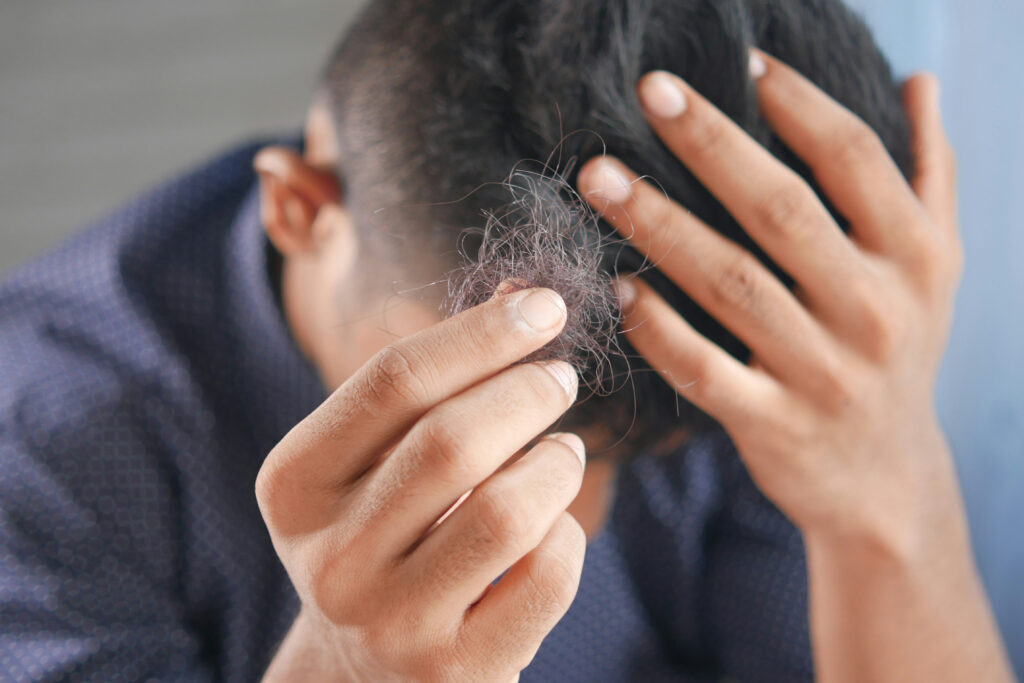
Finding hair in the shower drain or on your pillow can be unsettling. For many men, even a small increase in shedding immediately raises concerns about balding.
But the reality is that losing some hair every day is completely normal. Hair naturally cycles through growth, rest, and shedding phases, meaning healthy men lose hair daily even without developing baldness. The challenge is knowing the difference between normal shedding and early signs of progressive hair loss.
If you have ever wondered how much hair loss per day is normal for men, this guide explains what science says, what causes excessive shedding, and when it may be time to pay closer attention.
How Many Hairs Do Men Normally Lose Per Day?
On average, most men lose between 50 and 100 hairs per day. This is considered a normal part of the natural hair growth cycle.
Because the average scalp contains around 100,000 hair follicles, daily shedding at this level usually does not noticeably reduce hair density. In fact, many shed hairs are replaced simultaneously by new growing hairs.
Why Hair Shedding Happens Naturally
Hair does not grow continuously forever. Each follicle follows a repeating cycle made up of several phases:
| Phase | What Happens | Duration |
|---|---|---|
| Anagen | Active hair growth | 2–7 years |
| Catagen | Transition and follicle shrinkage | 2–3 weeks |
| Telogen | Resting phase before shedding | 2–4 months |
At any given time, a small percentage of hairs are naturally in the shedding stage. This process allows new hairs to replace older ones and maintain healthy scalp coverage.
Is Hair Loss in the Shower Normal?
Yes — seeing hair while washing is usually normal. Many shed hairs become trapped between other strands during the day and are released during showering or brushing. This can make shedding appear more dramatic than it actually is.
Men with longer or thicker hair may notice shedding more easily because individual strands are more visible. Frequent washing does not cause male pattern baldness — shampooing simply releases hairs that were already in the shedding phase.
What Causes Temporary Increased Hair Shedding?
Sometimes hair shedding temporarily increases without indicating permanent baldness. This condition is often called telogen effluvium, and it occurs when more follicles than usual enter the resting phase at the same time.
Common triggers include:
- Physical or emotional stress
- Illness or fever
- Rapid weight loss
- Poor nutrition
- Sleep deprivation
- Major surgery
- Certain medications
Fortunately, this type of shedding is often temporary and may improve once the underlying trigger resolves.
Normal Shedding vs Male Pattern Baldness
Many men confuse normal shedding with male pattern baldness. However, the two are fundamentally different in nature and outcome.
| Normal Shedding | Male Pattern Baldness |
|---|---|
| Occurs evenly across the scalp | Concentrated at temples and crown |
| Hair density remains stable | Progressive loss of density over time |
| Hair regrows normally | Follicles miniaturize and weaken |
| Usually temporary or cyclical | Permanent without treatment |
| Not linked to DHT sensitivity | Driven by genetics and DHT |
The key issue is not simply how much hair falls out, but whether lost hair is being adequately replaced.
When Does Hair Loss Become Abnormal?
Hair shedding may become concerning when it is sudden and excessive, accompanied by visible thinning, persistent for several months, focused around the temples or crown, or associated with scalp irritation or inflammation.
Warning signs that may indicate something more than normal shedding:
- Visible scalp under bright lighting
- Widening temples
- Thinning at the crown
- Hair strands becoming progressively finer
- Noticeable hairline changes over months
- Reduced overall density that does not recover
Can Stress Increase Hair Shedding?
Yes. High stress levels may contribute to temporary shedding by disrupting the normal hair growth cycle. This does not necessarily mean permanent baldness will occur. Stress-related shedding often improves gradually once stress levels decrease and the body recovers.
Some research also suggests mild seasonal fluctuations in hair shedding may occur, particularly during late summer and fall. However, these changes are generally subtle and temporary.
How Can You Tell If Hair Is Actually Thinning?
Many men notice thinning before they notice actual shedding. Signs of reduced density may include:
- Hair looking flatter or less voluminous
- More scalp visibility in photos or under overhead lighting
- Difficulty achieving previous styling results
- Changes that become more apparent when hair is wet
Taking monthly photos under consistent lighting can help track gradual changes objectively over time — something that is very difficult to assess by memory alone.
Can Shed Hair Grow Back?
It depends on the cause. Hair loss caused by stress, illness, or nutritional deficiencies often improves once the underlying trigger is corrected. This is one of the reasons identifying the cause matters before assuming the worst.
In contrast, genetic hair loss caused by androgenetic alopecia is usually progressive without intervention. Evidence-based treatments like finasteride and minoxidil may help slow progression and preserve existing hair density.
When Should You Consider Professional Evaluation?
It may be worth consulting a healthcare professional if you experience any of the following:
- Sudden heavy shedding with no clear trigger
- Patchy or uneven hair loss
- Scalp inflammation, pain, or irritation
- Rapidly worsening thinning over a short period
- Hair loss combined with fatigue, weight changes, or illness
Some medical conditions unrelated to genetics — including thyroid disorders and iron deficiency — can contribute to abnormal hair loss and are worth ruling out.
Frequently Asked Questions
Is losing 100 hairs a day normal for men?
Yes. Losing between 50 and 100 hairs daily is considered normal for most men and does not indicate balding on its own.
Why do I lose more hair when I shower?
Showering releases hairs that were already in the shedding phase and had become trapped between other strands. It makes normal shedding more visible, not worse.
Does shedding always mean balding?
No. Temporary shedding can occur for many reasons — stress, illness, diet — and does not automatically indicate male pattern baldness. The key is whether density is being maintained over time.
How can I tell if my hair loss is serious?
Visible thinning, temple recession, crown loss, or progressive density reduction that does not recover may suggest androgenetic alopecia rather than normal shedding.
Can stress-related shedding be reversed?
In many cases, yes. Once the underlying trigger improves, hair growth may gradually return to normal within several months.
Final Thoughts
For most men, losing between 50 and 100 hairs daily is completely normal and part of the natural hair growth cycle. The more important question is not how much hair falls out on a given day, but whether your hair is maintaining its density over time.
Temporary shedding is common and often harmless. Progressive thinning around the temples or crown, however, may indicate male pattern baldness — a different process driven by genetics and DHT rather than the normal hair cycle.
If you notice persistent changes in your hairline, density, or scalp visibility, early evaluation may help you identify the cause and explore options before significant progression occurs.
Written by ModernHairRecovery Editorial Team.